Global ocean transit entered 2025 under intense pressure, but the year’s most important story wasn’t just disruption; it was redistribution. project44’s latest State of Ocean Transit report captures how tariff escalations, geopolitical instability, and labor unrest pushed global trade into new lanes, new sourcing hubs, and new chokepoints, testing the limits of maritime logistics.
Tariffs trigger a reshuffling of trade lanes
The surge in blank sailings became a visible sign of this rebalancing. China–Europe routes saw the highest cancellations, while Transpacific sailings spiked midyear as the U.S. and China exchanged steep reciprocal tariffs. Between the largest ocean capacity in history and softer consumer demand cancellations remained well above normal as carriers continually adapted, redistributing ships and services in response to tariff-driven volatility.
Sourcing diversifies as global volumes decline
Container volumes fell 13% compared to 2024, but the more meaningful trend was where those volumes went. China–U.S. imports dropped 27% after shippers front-loaded inventory early in the year and sustained tariff pressure. At the same time, U.S. imports from Indonesia and Thailand rose more than 30%, a sign that supply chains are adjusting not only to near-term cost pressure but to longer-term geopolitical recalibration.
Meanwhile, U.S. exports to China contracted sharply, down 42% for the year as retaliatory tariffs dampened demand for American products, particularly agricultural and industrial goods. Together, these shifts reveal a world where sourcing networks are no longer anchored to one geography but actively redistributing across regions.
Ports stabilize but feel the strain of shifting trade
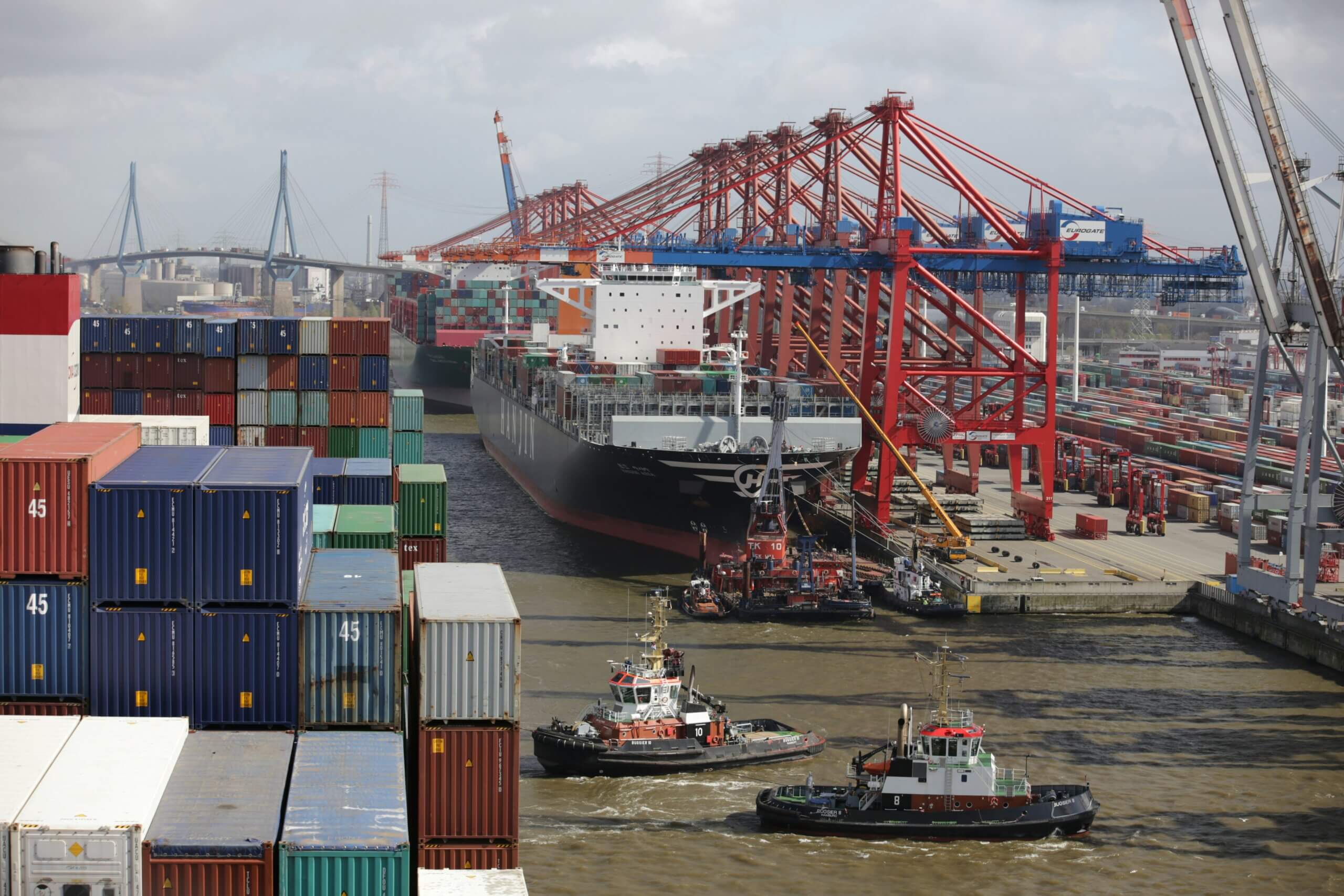
Ports saw mixed progress in 2025. Major hubs such as Los Angeles, Antwerp, and Rotterdam reduced median import dwell times through better inland logistics, optimized capacity, and stronger coordination. Yet these gains were fragile. As trade patterns shifted and vessels were rerouted around chokepoints like the Suez Canal, transshipment hubs like Singapore, Busan, and Colombo faced renewed congestion driven by schedule disruptions, weather delays, and infrastructure constraints. Export dwell times also reflected ongoing instability, particularly in Europe where labor actions caused sudden setbacks after months of improvement.
Canal traffic patterns highlight a network in motion
Two of the world’s most critical maritime gateways told one of the clearest redistribution stories of the year. After years of drought, the Panama Canal rebounded, averaging more than 700 container vessels per month and even surpassing 1,000 during peak periods.
Meanwhile, the Suez Canal operated at roughly half of its historical container throughput as renewed Houthi attacks and heightened insurance risk forced carriers to reroute vessels away from the region.
What 2025 reveals: Resilience comes from mobility, not stability
The year’s disruptions reinforced a key lesson for supply chain leaders: resilience is increasingly defined by agility. From shifting sourcing strategies to dynamic routing, organizations that invested in flexibility, automation, and diversified networks were best positioned to absorb shocks. While some indicators point to stabilization, the structural forces reshaping global trade are far from temporary.
As 2026 approaches, the structural forces reshaping trade show no signs of fading. The full State of Ocean transit report offers deeper analysis across blank sailings, dwell times, volumes, and chokepoint dynamics to help supply chain leaders anticipate what the next phase of global trade realignment will look like.
Get the insights shaping global ocean transit, and what they mean for your 2026 supply chain strategy.